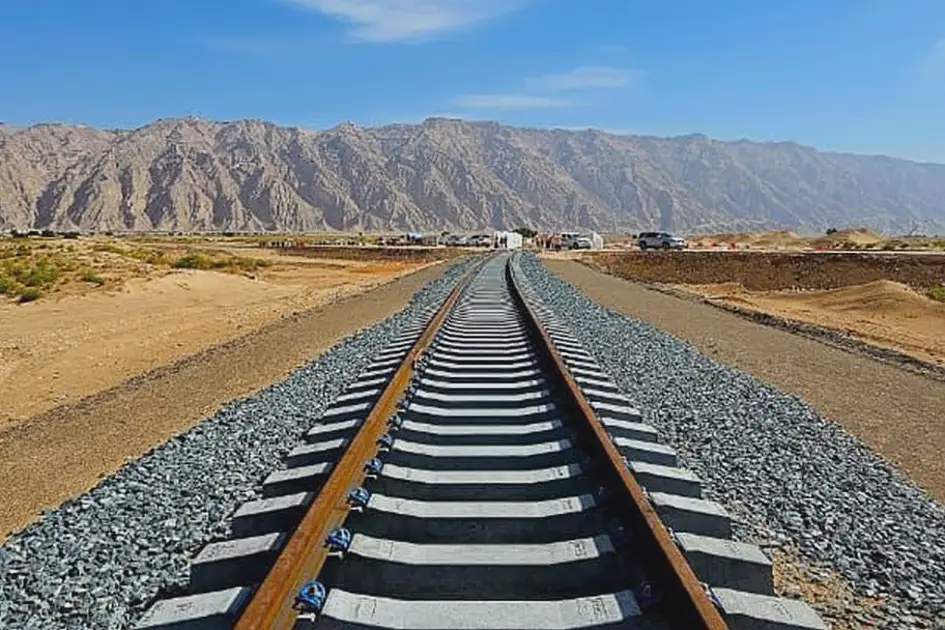
The Gulf Cooperation Council's shared railway network, linking all six member states — the UAE, Saudi Arabia, Kuwait, Bahrain, Qatar and Oman — is now nearly 56 percent complete, GCC Secretary-General Jasem Mohamed Albudaiwi said, with full operations targeted for December 2030. Stretching roughly 2,117 kilometres, the line ranks among the region's largest infrastructure undertakings.
Inside the UAE, the route enters through Abu Dhabi and Al Ain before continuing into Oman via Sohar, tying the country into the single regional network alongside its existing national rail infrastructure. Passenger trains on the line are designed to run at speeds up to 200 km/h, while freight trains will operate between 80 and 120 km/h.
Albudaiwi said the recent agreement among member states "establishes a common framework governing how member states will implement and operate the railway network." He also pointed to the project's role in regional trade resilience, noting that such efforts have "contributed to providing alternative routes for the movement of goods and commodities" at a time when some traditional shipping routes have faced disruption.
Official projections suggest the completed network could carry more than 8 million passengers and close to 95 million tonnes of freight annually by 2045. For the UAE specifically, the line promises more direct rail access to Saudi and Omani markets and reinforces the country's ambition to become a logistics hub linking the wider Gulf region by land as well as by sea and air.
For fast, reliable access to our news and stories, download and install the latest version of our app.
Download the app